The Rhinoceros Viper: Africa’s Hidden Jewel of the Forest Floor
Post By: @DrewWild
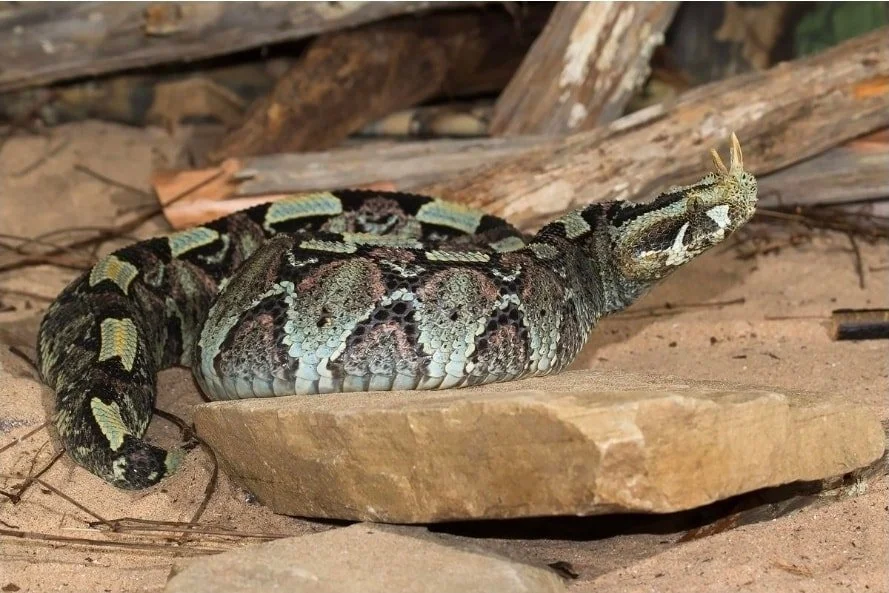
Image© LSTM
The Rhinoceros Viper: Africa’s Hidden Jewel of the Forest Floor
The Rhinoceros Viper (Bitis nasicornis) is one of Africa’s most distinctive and beautiful snakes. Known for the horn-like scales on its snout and its vivid patterning, this species plays an important role in the ecosystems of Central and West Africa’s rainforests.
The rhinoceros viper lives in humid tropical forests and swampy areas across Central and West Africa, including countries such as Cameroon, Ghana, Nigeria, and the Democratic Republic of Congo. It prefers areas with thick vegetation and leaf litter, where it can easily blend in with its surroundings. Its camouflage helps it remain hidden from both predators and prey.
The rhinoceros viper is an ambush predator. Rather than actively chasing prey, it waits patiently for small animals such as rodents, frogs, or birds to pass by. When the opportunity arises, it strikes quickly and delivers a hemotoxic venom that immobilizes the prey by breaking down blood and tissue. This “sit-and-wait” hunting strategy allows the viper to conserve energy in its low-light, humid environment.
The venom is highly toxic, affecting blood and tissue, but bites are very rare. This is because the species is shy and slow-moving, and it rarely comes into contact with people. When left undisturbed, it poses no threat to humans.
As a predator of small mammals and other animals, the rhinoceros viper helps maintain balance in the forest ecosystem by controlling populations of prey species. In turn, it serves as food for larger predators, making it an integral part of the rainforest food web.
Although Bitis nasicornis is not currently endangered, it faces threats from deforestation, habitat loss, and the illegal pet trade. Protecting rainforest habitats is essential for the survival of this and many other species that depend on them.
The rhinoceros viper is a remarkable example of nature’s design. A beautifully camouflaged, patient hunter that plays a key role in Africa’s rainforest ecosystems. While its appearance can be intimidating, it is an important and largely harmless part of the natural world when respected in its environment.